

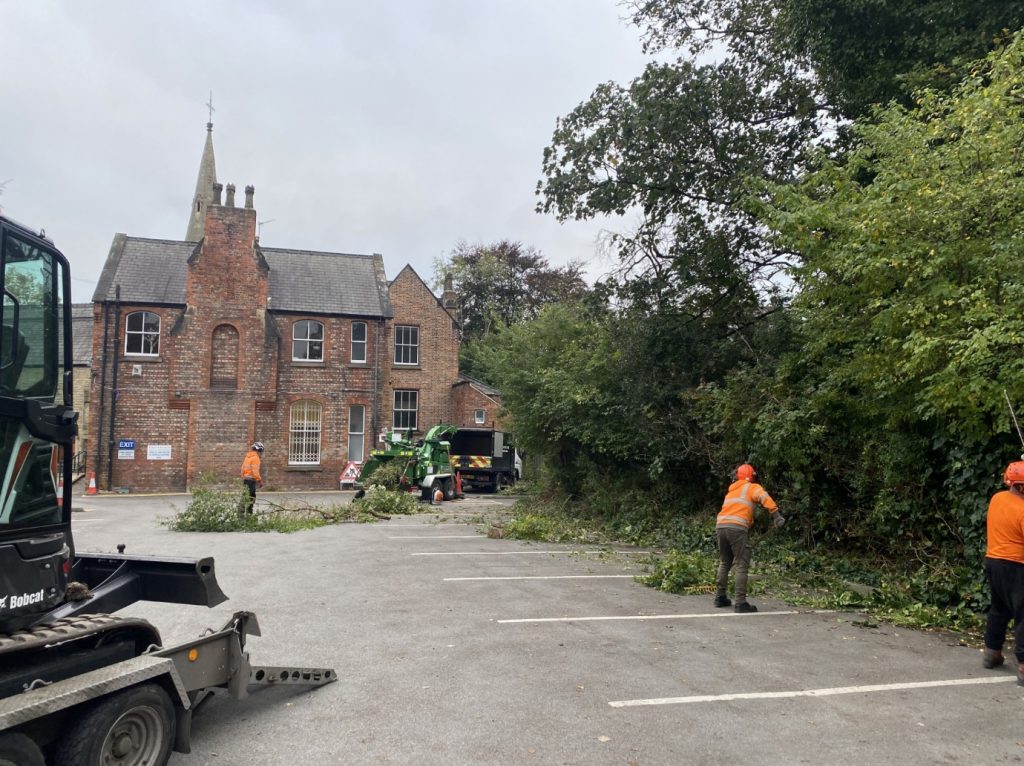

Planning a development project or garden renovation that involves removing trees?
Understanding the legal requirements for site clearance protects you from significant penalties whilst ensuring your project proceeds smoothly. If you’re a homeowner clearing a single tree or a developer managing large-scale site clearance, knowing the regulations is essential.
This post will provide tips for getting permission, seasonal considerations, and legal compliance involved in site clearance and tree removals. Our experience across domestic and commercial projects in Cheshire and the North West means we understand exactly what’s required to keep your site clearance legal, safe, and environmentally responsible.
Do You Need Planning Permission for Site Clearance?
The short answer is that it depends on several factors, including tree protection status, location, and scale of work. Site clearance regulations in the UK are designed to protect valuable trees while also allowing necessary development to proceed.
Tree Preservation Orders (TPOs)
Tree Preservation Orders represent the most significant legal protection for individual trees or groups. A TPO protects trees deemed important for public amenity, prohibiting cutting down, uprooting, topping, wilful damage, or even cutting roots without written consent from your Local Planning Authority.
If your site includes TPO-protected trees, you must apply for consent before any work proceeds. Applications require detailed documentation including tree identification, proposed work descriptions, and clear justification. The process typically takes several weeks, and refusal is possible if authorities deem the work unjustified.
Breaching a TPO is a criminal offence with serious consequences. Fines can reach £20,000 in Magistrates’ Court or unlimited amounts in the Crown Court for serious offences. Injunctions may also halt your entire project, creating costly delays beyond the financial penalties.
The good news is that with proper planning and professional guidance, navigating TPO requirements doesn’t have to be complicated. We manage the entire application process, liaising directly with planning authorities to secure necessary permissions efficiently.
Conservation Area Regulations
Trees within designated Conservation Areas receive automatic protection even without specific TPOs. For any tree with a trunk diameter exceeding 75mm (measured at 1.5 metres above ground), you must serve a Section 211 Notice to your Local Planning Authority six weeks before commencing work.
This notification period allows authorities to assess if the tree warrants a TPO. Failure to provide proper notice carries the same serious penalties as breaching an existing TPO. Many property owners discover Conservation Area status only when planning site clearance, which is why early investigation is so important.
If you’re unsure whether your property falls within a Conservation Area, we can check this for you.
Felling Licences and Planning Exemptions
Large-scale tree removal outside of private gardens requires Felling Licences from the Forestry Commission when timber volume typically exceeds 5 cubic metres. These licences often include conditions requiring replanting and maintenance of replacement trees for specified periods.
Necessary work to implement approved planning permissions generally doesn’t need additional TPO consent. If your development has full planning permission and tree removal forms part of approved plans, you may not need separate TPO applications. However, it’s always worth confirming this with your Local Planning Authority before you start.
We’ve built strong relationships with tree officers across multiple local authorities, meaning we can help to streamline the approval process and keep your project moving forward.

What is the Best Month or Season to Cut Down Trees?
Winter: The Best Option (November to February)
Winter is ideal for most tree removal and site clearance work, because trees are dormant, which minimises stress and sap loss from cutting. The lack of foliage gives clear visibility of branch structure and potential hazards, making the work safer and more efficient.
Most importantly, winter falls outside nesting season, so there are no concerns about disturbing breeding birds. Ground conditions might be wetter, but the dormant trees mean less damage to the surrounding plants you want to keep. For large-scale site clearance, winter work is the best time to protect your existing landscape features.
Read this blog post all about tree care in winter to find out more.
Spring and Summer Considerations (March to August)
The UK’s bird nesting season runs from March through August, creating significant legal restrictions during these months. It’s illegal to fell or work on trees when it would affect breeding birds. Before any spring or summer tree work, thorough surveys must confirm no active nests are present.
For site clearance projects, nesting season can be tricky. Even if initial surveys find no nests, birds may move in between surveys and when work starts. Certain tree species also don’t respond well to spring and early summer work. Species prone to sap bleeding, including maples, birches, and beeches, should avoid pruning during active growth periods.
If you’re planning work during these months, we’ll conduct thorough wildlife assessments and guide you through the timing to keep everything legal and stress-free.
Autumn and Emergency Work
Early autumn can work well for tree removal, though late summer through early autumn is when trees are withdrawing nutrients from leaves back into their roots. For site clearance where you’re removing all vegetation, autumn timing works reasonably well, as long as you’ve confirmed the nesting season has ended.
Storm damage and immediate safety hazards need an urgent response regardless of the season. Emergency tree work goes ahead when necessary to protect property and people, though professional tree surgeons still conduct fast-paced wildlife assessments before any work starts.
We provide year-round services with appropriate seasonal understanding and compliance with the likes of site clearance regulations. If you’re unsure about timing for your project, just give us a call and we’ll advise you on the best approach.
Do I Need Permission to Cut Down a Tree on My Property?
Property ownership doesn’t automatically give you unlimited tree removal rights. Several scenarios require formal permission before felling trees, even on land you own.
Benefits of Hiring Certified Site Clearance Specialists
Professional tree surgeons deliver advantages extending far beyond simply removing trees. Certified specialists provide comprehensive services protecting your legal position and ensuring safety and environmental responsibility.
The benefits of hiring professional tree surgeons for your site removal project include:
- Expertise in regulations and compliance
- Professional assessments and safety checks before any project begins
- Environmental responsibility and sustainability considerations
- Specialist equipment and proven techniques
They also carry NPTC qualifications, ensuring technical competence in climbing, cutting, rigging, and equipment operation. Comprehensive liability insurance protects property owners from financial exposure if accidents occur during tree maintenance or removal work.
Hiring professionals means ensuring long-term value from any project. Hiring professional tree surgeons may require upfront investment, but with proper compliance, landowners prevent penalties ranging from thousands to unlimited fines.
They also decrease the possibility of personal injury risks and property damage, completing work efficiently and reducing overall development timelines. Overall, expert work delivers superior results without costly mistakes requiring correction.
Why Choose Cheshire Trees for Site Clearance
We offer technical expertise, regulatory knowledge, and genuine environmental commitment in our site clearance services. We’ve developed a complete understanding of Cheshire’s specific conditions and can complete work ranging from tree care and maintenance to full-scale site clearance.
Experience across domestic and commercial projects means we scale services appropriately, whether you’re removing a single garden tree or clearing entire development sites. Our NPTC-qualified team brings both practical skills and arboricultural knowledge to every project.
Ask us for a bespoke quote today or call us on 07766 582598.
For convenience, try the WhatsApp chat feature on our website.